
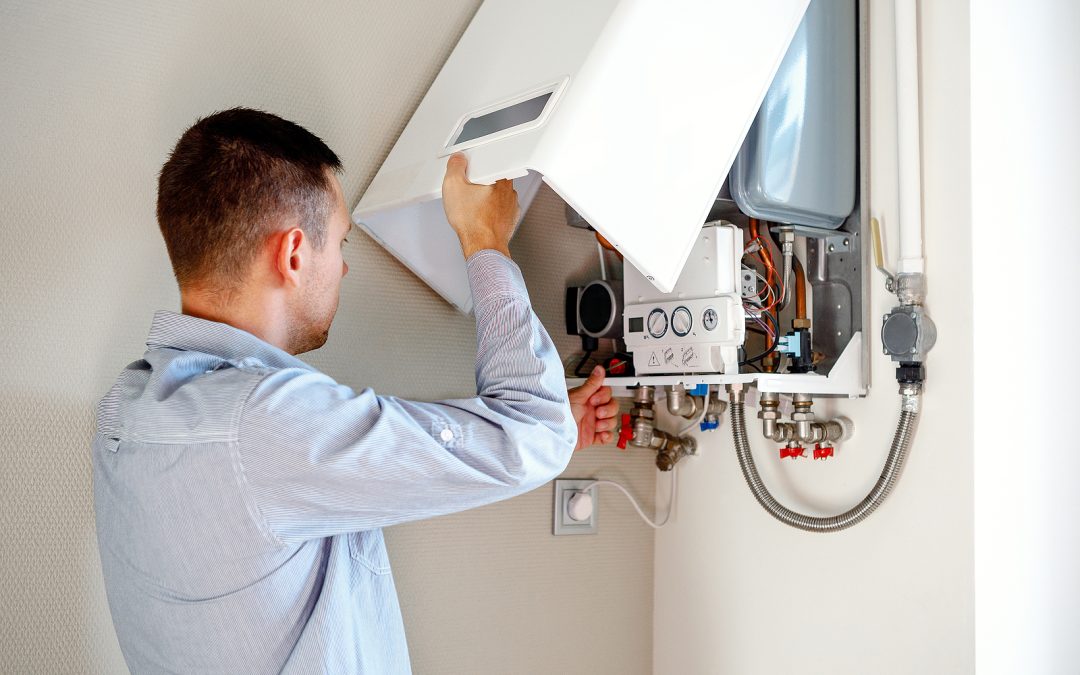
Having your gas boiler serviced regularly is essential to help it last for as long as it is designed to. It should last for a decade or more and, despite efforts at decarbonising the energy supply, gas boilers will certainly still be in use ten years from now.
The first reason for getting a gas boiler serviced is simple: in almost all cases, manufacturers will recommend an annual service to check everything is working well and safely, with any defects being fixed.
Doing this has a range of benefits:
- If the boiler warranty requires an annual check to avoid invalidating it, this can be secured.
- If any defects are identified early, this prevents them from getting worse and leading to declines in boiler performance.
- Keeping the boiler in as good a state as possible should ensure it lasts longer, which should be 10-15 years.
- If the boiler does need replacing, the inspection during its service will reveal this.
Why Will You Still Need A Gas Boiler In 2036?
In the latter case, you might feel reluctant to get a new gas boiler in a world where there has been so much talk about decarbonising the energy system and moving to ‘Net Zero’.
However, the reality is that even as the energy system transitions, gas will still be needed for many years to come. That means it is well worth ensuring your boiler is looked after.
How this is managed is an important question at various levels. A recent report advised the government that current factors such as the dwindling of North Sea resources and limited storage could leave the UK running out of gas in rather less than ten years from now.
This leaves ministers with some big decisions to make, with pressure from different sides: From energy firms warning of the urgent need to future-proof supply, from consumers concerned about energy prices, as well as from Net Zero sceptics and environmentalists.
Where Will Britain’s Gas Come From?
Environmental concern has focused on proposals to expand oil and gas production with new licences in the North Sea, which would go against the Labour government’s manifesto promise but is something the new prime minister Andy Burnham appears willing to consider.
If this were not to happen, the likelihood is that Britain would be increasingly reliant on imports for the time being, with Norway continuing to extract gas from its own section of the North Sea and liquefied natural gas primarily coming from the Middle East.
At present, domestic gas supplies from the North Sea have been falling for 25 years and at a decline of five per cent a year; this drop could have major implications, something that pushing ahead with the Rosebank and Jackdaw fields could address.
Mr Burnham has pledged a “pragmatic” approach to the issue, but in the meantime, anyone with a gas boiler can be certain of one thing: the debate about what the government should do about gas supplies matters because its use as a fuel is not about to end anytime soon.
Should You Get The Boiler Serviced More Than Once A Year?
If you do want a new boiler to last for a decade or more, or for one you have had a few years to last at least a few more, regular annual servicing is the least you should do. In some cases, you may be wise to consider having them looked at more frequently.
A prime reason for doing so is if you have noticed possible issues with your boiler. If your last service was less than a year ago, it may be wise to get it looked at now and not wait for the next service to be due.
The most serious problems, which may indicate that you need to replace the boiler altogether, can include:
- A bad smell
- Radiators taking longer to heat up
- Higher energy bills (taking into account factors like the changing seasons and the new Energy Price Cap)
- Leaks
- Strange noises like banging and clinking
In some cases, a fresh service could solve the problem without any need to fully replace the boiler.
Other circumstances in which you should wait less than a year for a service could include simply having an old boiler that might need more maintenance, as well as if you live in a hard water area, as limescale can build up easily.
The latter can certainly apply to London boilers as the water in the capital is harder than most areas, although the hardest water areas in England are to be found in Gloucestershire, followed by a plethora of locations in the Midlands.
However much your boiler needs to be serviced, ensuring this happens will enable you to make it last for many years to come.