
If you have just paid for a new gas cooker and need it installed in your south London home, you might have noticed some alarming news reports suggesting that you might soon be struggling to use it due to a lack of gas.
This fear has emerged from Centrica, the owner of British Gas, which said that UK supplies in its Rough storage facility have sunk to “concerningly low” levels, down 26 per cent from a year ago, with only enough for one week of demand.
Rough And Not Very Ready
In a statement on the issue, which was published on January 10th, Centrica said the UK’s gas storage had come under pressure due to a combination of very cold weather and extremely high gas prices.
That these factors are in play is true enough; meteorologists have measured the lowest temperatures in Britain for over a decade, while gas costs have risen across Europe due to the predicable non-renewal of the deal between Russian energy supplier Gazprom and the Ukrainian government to allow gas to be piped through its territory into central Europe.
Even before the termination of that five-year-old agreement from the pre-war days, storage levels were down across Europe. Centrica noted that at the beginning of December, European storage facilities were at 69 per cent capacity, compared with 84 per cent a year before.
The notion that the UK could be a week away from running out of gas may seem alarming, but customers should be reassured that it really isn’t quite so bad – and not just (although it helps) because the extreme cold snap has now ended.
The True Picture Is Different
As The Independent noted, the UK is not wholly reliant on stored gas, or even close to it. The gas you may use in your new cooker (once installed), your boilers, or your gas fire do not all come from that stored by Centrica at Rough.
Firstly, much of Britain’s gas comes from a domestic source: the North Sea. While this is less than it used to be – the UK has not been self-sufficient in gas since the turn of the century – it is still a very substantial amount.
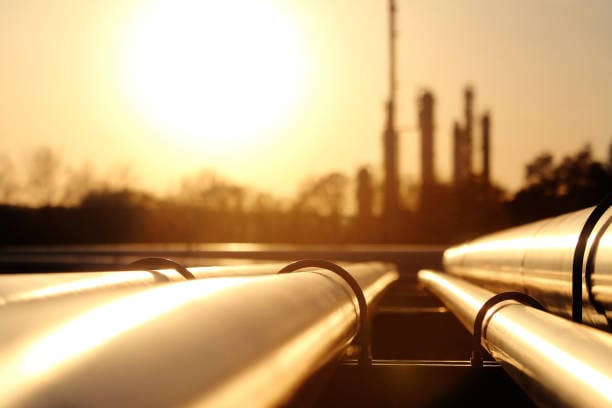
Gas is also imported from other countries by means other than finding its way into the Rough facility. In the 2000s, two pipelines were built to connect the UK with continental supplies, the BBL pipeline connecting Britain with the Netherlands, plus the Langeled pipeline from Norway.
Before the war in Ukraine, the small amount of gas the UK acquired from Russia came via the BBL pipeline, but the Langeled connection comes directly from Norway’s very large resources.
On top of this, the UK imports substantial quantities of liquid natural gas (LNG) from the US, with smaller amounts from Qatar and even Australia.
For all these reasons, the UK is not about to run out of gas. A government spokesman said ministers are “confident we will have a sufficient gas supply and electricity capacity to meet demand this winter, due to our diverse and resilient energy system”.
Why More Storage Capacity Would Be Good News
It is true to say, however, that such diversity and resilience is despite, not because of, Britain’s gas storage capacity, which never amounts to more than 12 days even on an average day when it is much warmer than in dark and chilly January. Other countries have far greater capacity.
This is an issue the Centrica statement highlighted, with group chief executive Chris O’Shea arguing that reliance on sources like LNG is risky because of the distance travelled, geopolitical uncertainties and the high demand for it.
Speaking about the Rough storage facility, which was only brought back into use after the Russian invasion of Ukraine triggered an energy shock, he said: “If Rough has been operating at full capacity in recent years, it would have saved UK households £100 from both their gas and electricity bills each winter”.
He added that Centrica will be investing £2 billion in upgrading Rough and adding more capacity, calling for a ‘cap and floor’ model of financing to be applied to help do this.
What this statement does highlight, however, is that not so long ago the UK had almost no storage left at all, with the Rough facility mothballed. At that point, North Sea gas and gas through pipelines flowed freely enough to meet the UK’s needs.
While this may now be more expensive and the Europe-wide task of weaning half a continent off Putin’s gas has not been easy, it is clear that the UK still has substantial means of meeting its gas needs.
Centrica may have a point about Britain’s gas capacity, but it is also talking up the risks this brings in the hope of getting extra government help for its plans.