
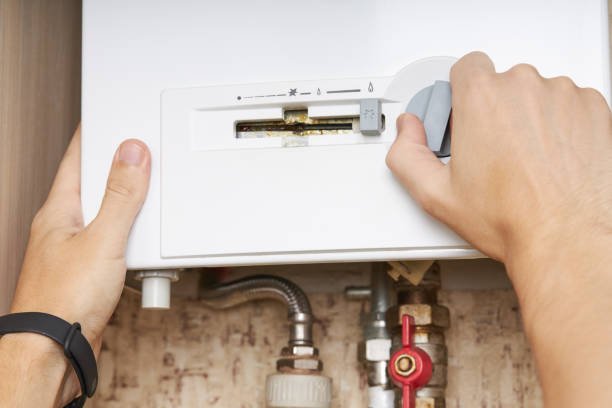
For many people, especially those living south of the Thames, a common tradition over the summer months is to turn off the boiler and leave it off all summer, turning it back on in late September or early October when autumn finally begins to bite.
A lot of people do this, especially if they have an older conventional boiler that connects to a separate water tank to heat water, as the amount of hot water needed during summer days is far more limited, and the radiators will very much be switched off.
But whilst it was not only common but expected to switch off boilers for a long time over the summer, is it actually a form of false economy, especially if you have a condensing boiler or combi boiler instead?
Whilst turning the boiler off for a few days or even potentially a couple of weeks before turning it back on during the height of summer might save gas and save some money relative to leaving it on, there is the potential to lose all of those savings if an emergency gas boiler service is required when September ends.
With that in mind, here are some of the consequences of turning off your boiler in June when you turn it back on in October.
Expect Cold Showers And Baths
If your shower system is connected to the boiler directly, then it goes without saying that if the boiler system is not turned on, then as soon as the hot water in the storage tank runs out, the hot water gets very cold very quickly.
Naturally, if you have an electric shower box, this is not as much of an issue as the shower unit will heat water automatically, but it is important to bear in mind that if you prefer baths, you need to turn on the boiler again and wait a while for the storage tank to heat up if you want hot water.
As well as this, some washing machines rely on hot water from the boiler, so if it is turned off, then only cold water cycles will work as intended.
You May Not Save That Much Money
Most modern boilers are programmable combi boilers that turn on and off automatically either based on user demand or based on the room temperature, turning on and off only when needed.
Because of this, the idea that flipping the switch off will save a significant amount on your energy bills is not always true in every instance, because generally, the boiler is not using too much energy when it is not in use.
Many combi boiler manufacturers even have a dedicated automatic “summer mode” which automates this process, turning off the heating except when there are unseasonably cold days generally caused by particularly heavy rainstorms.
This is particularly true if you turn off the boiler at night and turn it on in the morning; the increased energy needed to fire up the boiler and warm a particularly cool house is more than just leaving it on a very low setting.
It Could Break The Boiler
The big reason why turning a boiler off is a false economy is that it can increase the risk of the boiler breaking down, especially if it is left off for months at a time without a quick switch-on to keep it ticking over.
Boilers are designed to be left on, and switching them off can cause certain parts to seize up, can cause the pipes to get blocked and could even cause corrosion in certain cases.
It is also a cause of vapour lock in radiators, which is where certain parts of the central heating system do not turn on, typically requiring bleeding.
It can also cause problems for some appliances heavily dependent on hot water from the boiler, and could potentially damage parts in them as well.
This is not a universal expectation; some boilers can handle being switched off for long times better than others, and sometimes homeowners can get lucky and avoid any issues.
However, it is not generally worth the risk, especially since the payoff is far less than you think.
It Is A Sign Of A Bigger Problem
Switching off the boiler is generally something done with older boilers, so if that is the case, it might be time to consider a replacement.
Not only would this provide energy efficiency and lower bills simply by being a new boiler made with that in mind, but it would also give access to more precise thermostat controls.