
There is nothing like a spell of cold weather to get householders thinking about their home heating, especially if it is not up to scratch or starting to show its age.
One response might be to seek some repairs, while others could look for a like-for-like replacement. But there is an alternative well worth considering.
Underfloor heating is not a new thing. Indeed, the first London residents to use it date back to the city’s earliest days in the first century AD, when the Roman settlement of Londinium was established.
The Roman version of underfloor heating was known as the hypocaust, which featured a space under the floor supported by stone pillars. Vents leading from blacksmith’s furnaces would provide hot air, with the heat rising through the floor above.
Among the examples you can see from Roman London is the Billingsgate Roman Bath Complex, while another instance can be seen at Verulamium in St Albans.
What Are Your Options For Underfloor Heating?
Since most people living in 21st-century London do not have a blacksmith next door, a hypocaust system won’t be an option, although some areas may benefit from modern district heating systems.
Instead, your home could be fitted with modern gas underfloor heating or an electric system. Either of these would provide warmth rising from below, not only keeping you cosy but preventing an unpleasant situation some encounter in winter, in which the general room temperature is fine, but their feet are still cold.
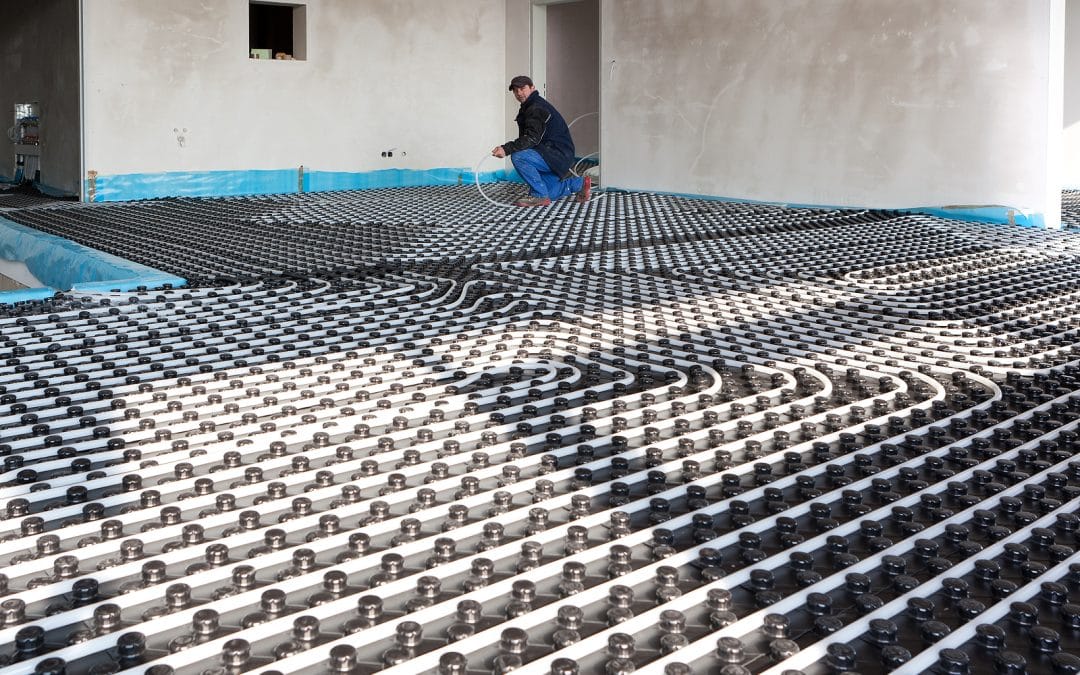
Gas systems work by having a system of pipes under the floor, which work through having heated water from a boiler passing through them in the same way as a radiator.
Electrical systems use a separate appliance that relies on coils embedded in the floor to generate heat.
What Are the Pros And Cons Of Gas And Electric Underfloor Heating?
Deciding that you would like underfloor heating is the first thing to do. The next step is to consider the pros and cons of gas and electric systems:
· Gas is cheaper
· Gas can benefit from energy-efficient boilers
· You will need to keep maintaining your boiler, although this would remain true as long as you have any gas appliances
· Electric heating has a lower carbon footprint and produces better air quality
· Electric offers more product options, including storage heaters and air source heat pumps
· Electric heating is costlier to install
· Electric heating also costs more to run
Some considerations are the same for both options, with modern smart heating systems enabling you to control the temperature levels accurately.
The only reason you would definitely have electric heating is if your home does not currently have a gas boiler, as the law now states that you can no longer have a new gas boiler fitted in a home that did not previously have one.
It is true that gas is a fossil fuel, although it is worth noting that it produces much lower emissions and less air pollution than ‘dirty’ fuels like oil and coal.
Electricity, on the other hand, is increasingly being produced by renewable and low-carbon means, but it is worth noting that some of Britain’s electricity still comes from burning gas in power stations. As of a year ago, this accounted for 38 per cent of electricity generation.
At the same time, the work of making and installing green energy facilities like wind farms is not a zero-carbon exercise.
For many people, however, the biggest consideration is cost. In an age when energy prices have soared in recent years, staying warm without paying eye-watering bills is the top priority.
What Kind Of Flooring Suits Underfloor Heating?
Something you may need to do before having underfloor heating fitted, however, is to change the flooring that you have.
This is based on the simple fact that some surfaces will allow heat to pass through from below easily, while others, being thicker or more insulating, will act as a barrier, which is the last thing you would want.
Flooring types that are well-suited to underfloor heating include:
· Tile and stone
· Engineered wood
· Laminate
· Vinyl tile
Flooring types to avoid include:
· Solid hardwood
· Thick carpets
· Rubber or foam
Since you would have to take a floor up to have underfloor heating installed, you would need to be making decisions over heating and flooring in tandem.
This, however, does mean that you can make decisions over your heating as part of a wider makeover of your home, or at least a part of it.
You may be familiar with the saying: “When in Rome, do as the Romans do.” In this case, you can copy what they did in London as well.