
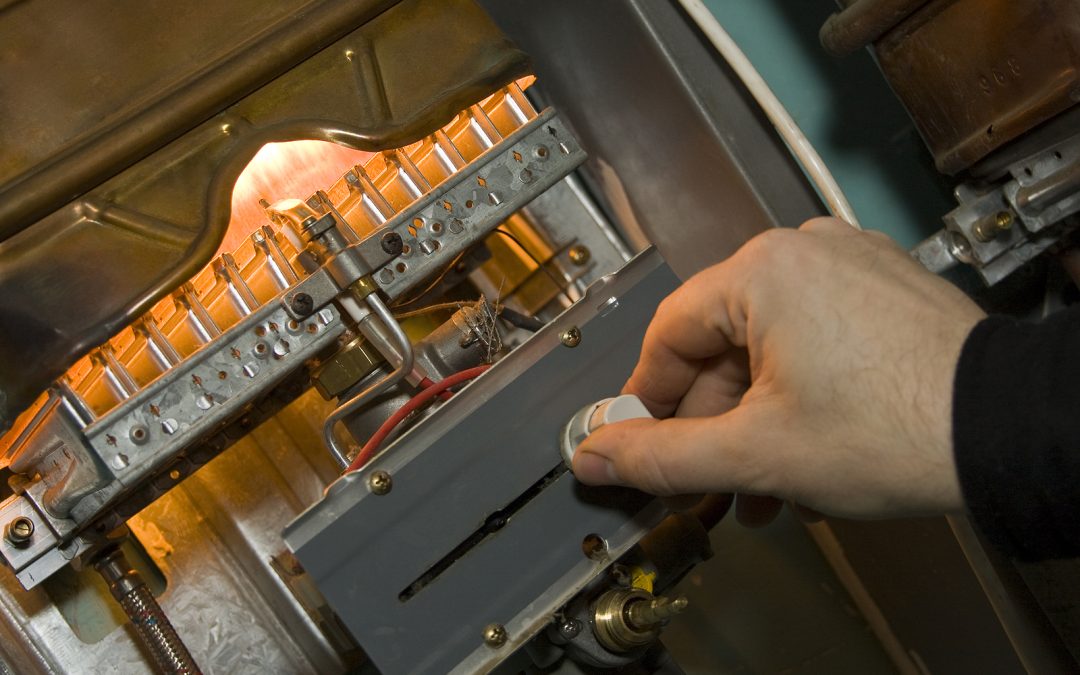
During the winter chill, a nightmare scenario for homeowners is if the boiler breaks down and stops your central heating system from functioning effectively until an emergency gas engineer can have a look at it.
Thankfully, help is around the corner, as local engineers on the Gas Safe Register can help fix any issues you have, minimise the downtime you have waiting for your heating to return and ensure that you and your family are safe.
As well as this, modern boilers are both highly efficient and highly reliable, and booking regular inspections and services will further maximise their longevity and minimise potential problems.
However, there are many issues that can be fixed without an engineer’s help, often involving switching settings or ensuring the boiler is at the right pressure without opening it up.
With that in mind, here are several common faults that are reported to us, grouped in order of priority.
What Are The Lowest Priority Gas Boiler Faults?
Ranging from the merely annoying to the easily fixable, low-priority gas faults are issues we can often help with over the phone, relieving frustration and ensuring that your heating system is working effectively as quickly as possible.
Malfunctioning Thermostat
Depending on the design of your thermostat, it can be quite annoying to attempt to adjust the settings and be met by little response, whether that is the boiler not turning on when the temperature is clearly cold, being too sensitive and activating at too high a temperature, or activating at the wrong time.
The easiest way to fix any of these issues is to check the instruction booklet for your thermostat to ensure that the settings are correct. Failing that, set it to manual and increase the temperature to see if that kickstarts it.
Failing that, try changing the batteries if it is a portable thermostat or get in touch with us to see if it needs replacing.
Low Boiler Pressure
If your boiler suddenly stops working or shuts off, it can be a very nerve-wracking situation, but in the vast majority of cases, there is a simple solution that you can generally do yourself.
The water pressure in your boiler changes over time based on the atmospheric conditions within your heating system, and it is possible for the pressure to go below the minimum setting needed for it to work at all. Most boilers shut off immediately if this is the case and display an error message or code.
Most boilers have a filling loop, a simple system consisting of either a single plastic lever or a pair of switches that supply water to the boiler.
This will increase the pressure, and once it reaches the optimal pressure (usually 1-1.5 bar depending on the unit), the boiler will come back to life. Repeated boiler pressure losses can be a sign of a more substantial boiler issue, however.
Frozen Condensate Pipe
One of the most common causes of boilers shutting down in winter is that the condensate pipe has iced over, causing the system to shut down for safety reasons.
This is, thankfully, relatively easy to fix; warm water, a hot water bottle or a heat pack, all of which can be heated using a kettle or a microwave, can be used to melt the ice. This means that all the boiler needs is a reset, and it should work fine.
What Are The Highest Priority Gas Boiler Issues?
By contrast, whilst the previous issues are relatively easy to diagnose and fix, the following are significantly more concerning and could lead to a risk of long-term property damage, serious malfunction or even potential danger to anyone in the property.
Pilot Light Goes Out Frequently
If your boiler has a visible pilot light, then seeing it go out is usually a sign of a fundamental issue with your boiler and can only be fixed by a Gas Safe engineer. This is especially true if your pilot light keeps extinguishing.
Pilot Light Has An Orange Flame
Pilot lights should burn with an intense blue flame, but if your boiler’s pilot light has turned yellow or orange, it could be a sign of a serious issue, as can the following signs:
- Burn marks on the boiler that have no alternative explanation.
- Smelling gas.
- The appearance of soot near your boiler or a musty smell.
- Significant condensation.
Turn your boiler off and contact an emergency engineer to look at the problem. If you think you have a gas leak, contact the National Gas Emergency Helpline at 0800 111 999.
Water Leaks
Water leaks are usually a sign of a broken component and can be potentially dangerous if the water gets into your walls or short-circuits electrical wiring. Switch off your boiler to minimise the damage and contact an emergency engineer.