
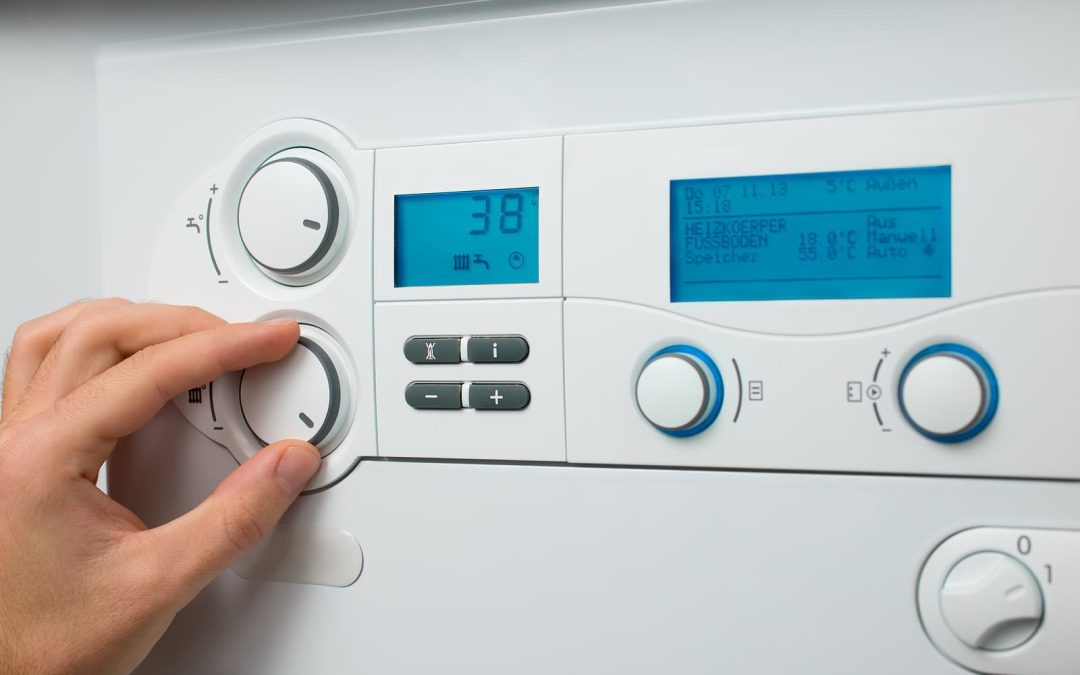
We’re reaching the time of year when many of us will be using our central heating system for the first time in months.
According to the Energy Saving Trust, the general consensus among UK households is that they will start using their heating when temperatures outside regularly fall below 15 degrees C.
Now that we’re approaching the end of October, many of us have turned on our central heating, but when it’s been switched off for months over the summer, this can sometimes lead to issues.
In fact, one of the most common issues at this time of year is a low boiler pressure. This can happen for various reasons, some of which are easy to fix yourself and others that will require a boiler engineer.
What does low pressure in a boiler mean?
All gas boilers require a certain level of pressure to work. The pressure is needed to pump the hot water through your pipes into both your taps and central heating system.
Low pressure in boilers is typically when the pressure falls below one bar. This is clearly marked on your boiler’s pressure gauge. So, if you turn on your central heating and nothing happens, one of the first steps is to check what pressure your boiler is currently at.
What causes low pressure in a boiler?
There are various reasons why your boiler pressure may have dropped below one bar. Often your boiler will turn itself off when this happens to protect itself. This is a normal safety feature and not cause for undue concern.
Among the most common reasons why boiler pressure can drop are:
- A leak in your central heating system.
- Bleeding your radiators.
- Faulty parts in or on your boiler.
A leak in your central heating system
In most cases, a leak that causes a gradual loss of pressure in your central heating system will be very small, which means you’re unlikely to notice the leak itself.
The main sign that this is an issue in your home is that your boiler pressure drops regularly. You shouldn’t need to top up the pressure in your boiler more than once or twice a year. So, if you find yourself facing this problem every couple of months, call in a heating engineer.
In this situation, the good news is that you can repressurise your boiler in the short term to ensure your heating and hot water is working, but you will need a professional Gas Safe engineer to find and fix the root cause of the issue.
Bleeding your radiators
Over time, air can get trapped in our central heating system and get stuck at the top of our radiators. A clear sign this has happened is that the tops of your radiators don’t heat up when your central heating is on.
Bleeding your radiators to release that trapped air is relatively easy to do yourself and a task that many homeowners will be familiar with.
However, often the process of bleeding radiators will lower the water pressure in your central heating system. If you know you’ve recently bled your radiators, you should therefore be able to solve the low pressure issue by repressurising your boiler.
Faulty parts in or on your boiler
Boilers are complex pieces of equipment and that means that parts can and do fail from time to time. Certain part failures, like pressure relief valves or expansion vessels, can cause your boiler pressure to drop.
These kinds of problems are not ones you can fix yourself. You need a registered Gas Safe engineer who can diagnose the issue and replace the faulty part.
Because gas is a potentially dangerous substance, it’s essential that you get a professional to assess your boiler’s condition and carry out the appropriate work to keep you and everyone else in your household safe.
Step-by-step guide: how to repressurise your boiler
Step 1: Identify what type of filling loop you have
Most modern boilers have an external filling loop – this is a flexible braided hose attached to a valve at either end.
However, older models may have either an internal filling key or a keyless internal filling loop. The quickest way to work out which type of filling loop your boiler has is to look at the manual.
Step 2: Open your filling loop
If you have an external filling loop, you need to open both valves to let cold water flow into your boiler’s system.
For boilers with internal filling keys, you instead need to use the filling key supplied with your boiler to let water into the system.
Keyless internal filling loops, meanwhile, are typically operated using a lever, which you’ll need to pull and hold to let water into the system and repressurise the boiler.
Step 3: Watch your pressure gauge
Whichever system your boiler has, keep an eye on your pressure gauge to ensure your boiler’s pressure rises to more than one bar, but not higher than two bars.
It’s advisable to close the filling loop before you reach the upper limit, as the pressure will often continue to increase once you close the filling loop – this might not be a significant increase, but if you’ve repressurised your boiler to two bars, it can push it close to its upper limit.