
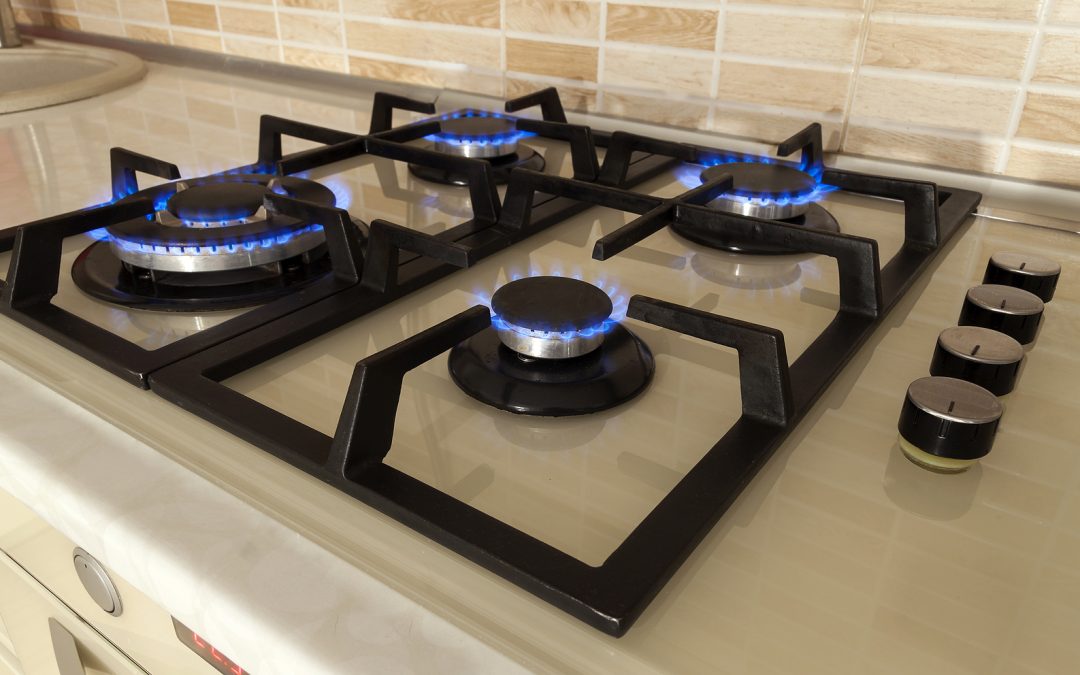
The nation cooks on gas and has done so for half a century, despite the existence of alternative stoves and appliances on the market.
Having a cooker installed is a huge part of any kitchen refurbishment, and choosing the right hob can be a personal choice depending on your cooking style and how much you tend to use it.
If you already have a gas boiler installed, it makes sense to also fit a gas cooker at the same time, and whilst various electric ovens and stoves are on the market, many homeowners still swear by a gas hob.
Why is this? To understand their continued popularity, it is important to go back to when they were initially made and sold in huge numbers, and why they remain a popular alternative to an electric cooker even half a century later.
Why Did Gas Cookers Become Popular?
The first gas kitchen hob was the creation of Alexis Soyer, an early celebrity chef who oversaw the construction of the kitchen at London’s Reform Club. Ironically, he would later go on to invent the travelling stove.
Gas cookers would slowly increase in popularity as the national gas grid expanded, and by the late 1940s, all new homes had a gas hob installed as part of an integrated kitchen unit.
One of the biggest influencers in that was the celebrity chef Fanny Cradock, who would regularly tour the country with her husband doing cooking demonstrations, eventually taking part in a film produced by the Gas Council called Kitchen Magic on the subject.
This, along with the general downfall of the use of coal gas by the 1960s, meant that a huge number of homes converted to natural gas, and it has remained one of the main ways in which we heat our homes and cook our food ever since.
Despite her now-infamous downfall due to her poor conduct on a 1976 episode of The Big Time, which immediately ended her career, Mrs Cradock’s lasting legacy was helping to convert millions of homeowners onto the benefits of cooking with gas.
Why Should You Still Use Gas Over An Electric Cooker?
Cooking with gas is often more convenient, faster and in many cases more affordable than using an electric cooker, even as electric hobs have evolved technologically and grown in popularity.
The biggest advantages of using gas over electricity can be divided into financial benefits and advantages which suit particular traditional cooking styles.
Financial Benefits Of Gas Cookers
Traditionally, natural gas is significantly cheaper per unit than electricity, which means that efficient boilers and cookers can be cheaper than an equivalent electric unit.
The actual level of savings is somewhat complex, given that electric cookers are significantly more efficient than many older gas hobs, but because electricity is much more expensive per unit it still comes out as more expensive than using gas.
This could change in the future, particularly if the electricity market is completely decoupled from natural gas used for power stations, but until very significant changes take place, you will save money using a gas cooker.
Cooking Benefits Of Gas Cookers
Most recipe guides and cooking tutorials tend to assume a gas hob, because they provide instantaneous heat that is easy to accurately control and measure to get the perfect amount of coverage on your pan.
By contrast, electric hobs tend to take a particularly long time to heat up, are difficult to get to the right heating level (meaning that you cannot turn it to full before reducing it to the level you need) and take a long time to cool down once turned off.
Whilst electric induction cookers are somewhat faster, they also require specialist magnetic pans to function, which can add a greater expense and frustration if they do not maintain a perfect connection to the induction surface.
When Should You Upgrade Your Cooker?
- Uneven heating, where food only cooks properly on one side of the pan
- Unusual smells, with burning plastic and smouldering metal being a particular point of concern
- Slow ignition or an unusual pop when turning on your gas hob rings
- Switches, knobs and control panels which do not do anything
- Higher energy bills which cannot be accounted for
- Cracks, warped cooking surfaces, rust and other visible damage that could be a sign of potential internal damage
- Regular repairs, particularly more than twice in two years
- If you are looking for smart controls, self-cleaning ovens, a convection fan, more efficient gas rings and other features seen in modern cooking units