
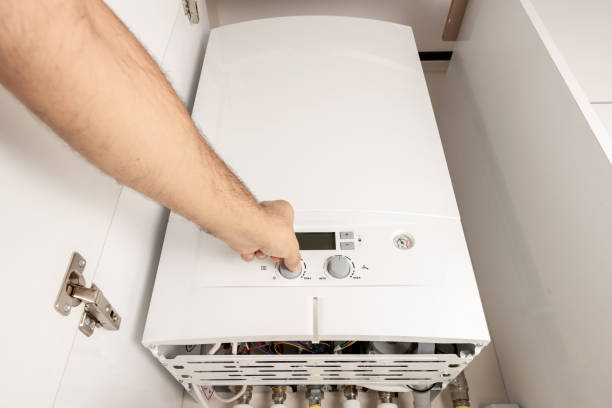
For anyone with a gas boiler that needs replacing, the last few years have seen growing pressure to switch to other forms of energy. However, it appears that this situation could be changing due to a change in government policy.
Over the last few years, the expectation has been that green electricity powered by renewables and, to a lesser extent, new nuclear energy, would replace fossil fuel power, whether that is electricity generated by burning gas or its direct use.
For those with gas boilers, the implication was that while a gas boiler service might keep your device running well, once the time came to replace it the likelihood would be that you would be steered towards a different means of power, eventually by compulsion.
Why Is Energy Policy Expected To Change?
However, that may have changed somewhat, following the recent resignation of Sir Keir Starmer as prime minister and his replacement by Andy Burnham:
- Mr Burnham has hinted that new North Sea oil and gas licences may be permitted
- The previous environment secretary and major proponent of a swift switch away from fossil fuels, Ed Miliband, has moved jobs to become foreign secretary.
- The government is coming under pressure for a change of energy policy
The last of these factors has come from both inside Britain and without. US president Donald Trump has been a staunch advocate of increasing North Sea production, albeit in combination with an obsessive dislike of windfarms (especially those near his golf courses).
However, pressure was also brought to bear on both the UK and Scottish governments after the recent Aberdeen South by-election, when a Conservative gained the seat after a campaign in favour of new North Sea oil and gas exploration.
That result occurred on the same night Mr Burnham returned to parliament and it may have given him food for thought as he waited to move into Downing Street.
What Does A ‘Pragmatic’ Approach To Energy Policy Mean?
Speaking to the BBC, Lucy Powell, a close ally of Mr Burnham, said that while the government would honour its 2024 manifesto commitments for no new oil and gas exploration licences to be issued in this parliament, there would be a “change of emphasis”.
She said that while the long run will still see a transition to renewables, North Sea hydrocarbons will still have a role to play for many years and the new prime minister will take a “pragmatic” approach.
This might not represent the full commitment to issue new licences and people “dancing in the streets of Aberdeen” claimed on social media by Donald Trump, but it does suggest that, at the very least, the brakes may be applied to any dash towards eliminating gas.
Part of the pressure to make the most of North Sea resources is the pressure placed on oil and gas prices by conflicts around the world, from Ukraine to the Straits of Hormuz, but also the reality that the transition away from fossil fuels will take many years.
Since gas produces fewer carbon emissions than burning oil and a lot less than coal, it is logical that this would be the last fossil fuel to be abandoned.
This all means you can expect to go on using a gas boiler for quite a few years yet. That also has implications if your boiler needs replacing, as you can still get a new gas appliance that can be used for many years.
Why Should You Get Your Gas Boiler Serviced In Summer?
Summer is always a good time to get your boiler checked and serviced, for several reasons:
- Engineers are more readily available at this time of year than in winter, when they will be busy with lots of emergency call-outs when boilers fail on cold days.
- If there are any minor faults, these can be fixed to prevent them getting worse.
- By getting your boiler serviced in the summer, you can be sure it is in good condition when autumn and winter come round and you need it more.
- If the engineer does discover severe faults that show the boiler needs replacing, now is the most convenient time to do it.
As the new government takes shape and various policies are announced, it remains to be seen exactly what the new policy on gas will be. However, it does look as if there is a change of tone at the very least when it comes to the energy transition.
Some of this may be based on cost-of-living issues, amid concerns that the energy transition is placing extra costs on fuel bills. But it may also come from the realisation that gas still has a role to play and is far from being the main culprit in raising emissions.