
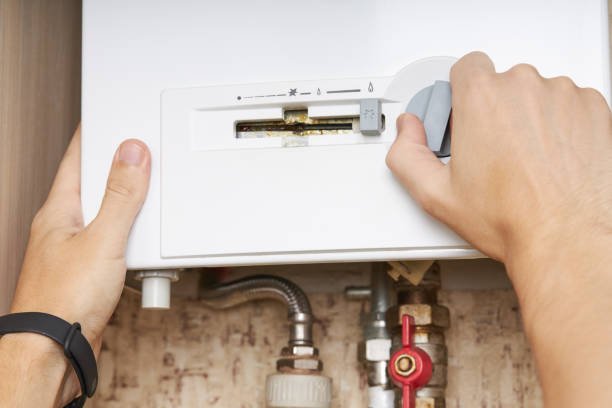
One of the biggest stories in the news concerning gas boilers is a proposed ban on their sale and installation, something that has finally received the clarity that has been solely lacking over the past few years.
The view of boiler engineers has remained consistent; you will not need to rip out your existing boiler and if you install one now, it will provide efficient, comfortable heat to suit your needs until it needs to be replaced in the 2030s due to age. What happens then is anyone’s guess.
This has been the position of engineers even if the position of the government from 2020 until 2024 has been rather less clear. It is a positive sign, therefore, that the Energy Secretary has provided some clarity when it comes to boiler installations.
Whilst the details of what is happening next and why merits exploration, the upshot from Ed Milliband is that there is no gas boiler ban; when 2035 comes, homeowners will not be required to rip out their boilers, and replacements are not going to be banned from sale.
The Right Choice Not The Only Choice
A lot of the confusion comes from the fact that there are two different standards for homes, only one of which actually affects existing homes and existing boilers.
The Future Homes Standard, a long-delayed set of minimal requirements for newly built homes, does not have an explicit ban on gas boilers, but it does require that any heating system meets an efficiency and low-carbon specification gas boilers are unlikely to be capable of.
This only applies to new homes, which can be designed around the characteristics of heat pumps and do not require extensive and expensive retrofit installations and major improvements to insulation to get the efficiency benefits that a heat pump can promise in ideal circumstances.
This does not apply to existing homes with existing boilers, which is a position Mr Milliband has been consistent on since before the 2024 General Election.
The initial boiler ban was predicated on the idea that there would be two types of boiler replacements to choose from; new homes and suitable semi-modern houses could have heat pumps whilst existing homes could have a hydrogen boiler fitted instead.
The idea of hydrogen boilers was sold on the basis that it could take very few adjustments to the infrastructure of the National Grid and an engineer could easily make the switch from a gas boiler to a hydrogen one without having to rip open the walls of the house to change the pipework.
This turned out not to be the case, and a few troubled tests made it difficult to proceed with plans to roll out hydrogen boilers on a wide scale, although research is still being undertaken as to the viability of hydrogen as a clean heating technology.
The problem there is that the gas boiler ban logically could only have been even theoretically possible with two solutions to replace a heating system that has been widely used for at least a century, and continuing with the ban could have forced some people to choose an option that is less suitable and more expensive.
This is something Mr Milliband points out himself, saying that he would only want such a plan or an aggressive initiative to replace existing heating solutions if it was clear and evident that everyone would be better off making the switch, especially given the inherent environmental cost of removing working boilers from homes in their millions.
Until there is a guarantee that heat pumps will be cheaper for people, and even with huge grants and savings that is not a universal guarantee, Mr Milliband was wary of forcing people to make a choice that could potentially leave them worse off.
This is different from the Future Homes Standard, which applies only to new houses and allows a lot of the complicated work that makes heat pumps expensive to install in an existing house to be done whilst the home is being made, making it far cheaper for the developers to choose that over a boiler when the pipework needs to be installed regardless.
The best approach for homeowners and manufacturers alike is a carrot rather than a stick; the Boiler Upgrade Scheme offers £7,500 towards the cost of a heat pump (or £5,000 towards a biomass boiler in certain rural areas).
Whilst in many cases the savings will still not be felt strongly enough, as heat pump installations increase this could make it a potentially viable alternative for certain homes as prices drop due to economies of scale.
For everyone else, the gas boiler will be the reliable, efficient alternative for the foreseeable future.