
If you are thinking of changing your household heating system before the cold weather of autumn and winter arrives, you might have considered various options already, but have you looked at underfloor heating yet?
If not, it is well worth considering, both in terms of how it can keep your home warm, what is involved in installing it, as well as the choice between gas and electricity.
As we have written previously, Londoners first used underfloor heating in the earliest days of the city, back in Roman times. Archaeologists have excavated instances of hypocaust systems in Roman London and elsewhere across the country.
These systems worked by having raised floors above cavities that would be supplied with warm air emanating down a flue from a furnace. This would then rise up through the floor to keep the inhabitants nice and warm. It was used to heat public and private baths as well as centrally heat homes and civic buildings.
How Modern Underfloor Heating Systems Are Powered
Back then, of course, the Romans could make use of furnaces used by Blacksmiths or dedicated furnaces lit by servants, which is not a practical solution for the 21st century home. But there are excellent options offered both by electricity and gas. It is worth considering what each of them is like and how they work.
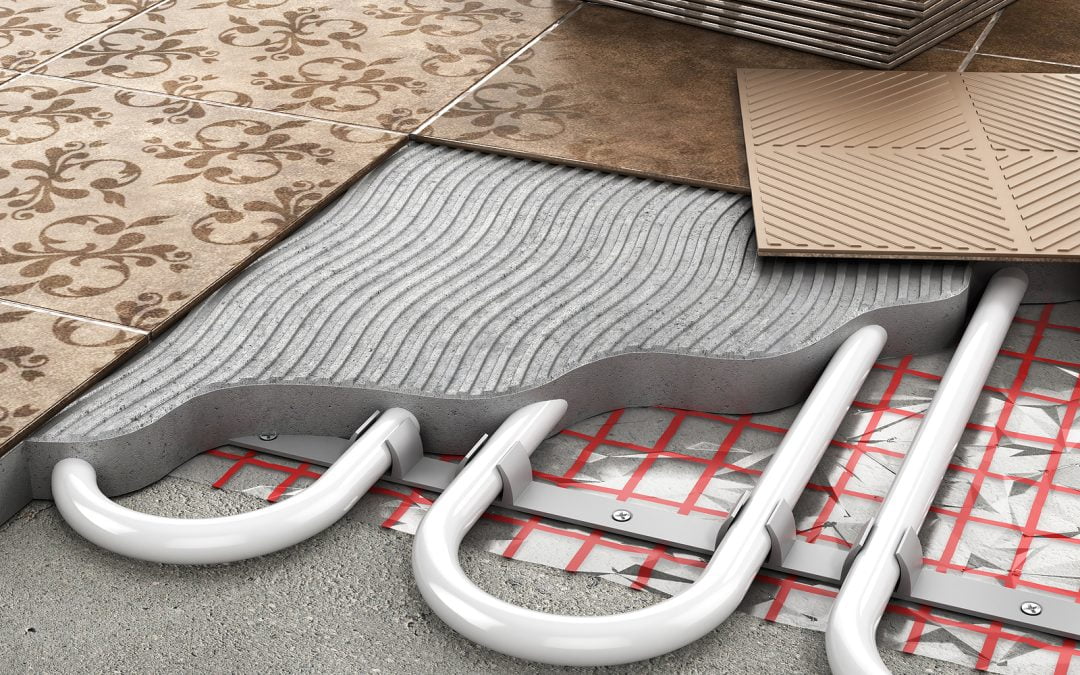
Gas underfloor heating is known as a ‘wet’ system. That doesn’t mean your home’s humidity is about to soar, however. It is simply a reflection of the fact that a network of pipes will be carrying heated water under the floors of your home, with this being heated by a central gas boiler, in the same way the boiler will typically heat radiators.
If you have electric underfloor heating installed, there is a system of wires installed under the floor. When a current passes through them, they get hot, with this heat rising up to heat the home.
Comparing The Cost
This is the difference in basic terms between the systems, but the issues that might help you make a decision on which system to use are likely to be how much it costs, how long it takes and how reliable the system is.
Electric underfloor heating is technically easier to fit, which makes installation cost less. Against that may be set the higher cost of running it, although that may change in the future if the wholesale price of gas and electricity is decoupled, something that was suggested during the last major surge in gas costs after the Russian invasion of Ukraine.
On that point, it is course possible to cut running costs if you have some form of home renewable energy, such as solar panels on your roof. It is also worth noting that any underfloor heating system will be more effective at warming the home and therefore cheaper to run than systems like radiators by the wall.
In the meantime, gas is a cheaper running option but more expensive to install. However, a more practical issue may be that because the water pipes in the wet system are bulky, it may be a challenge fitting it in some smaller and older homes, though not in new builds where there is normally more space under the floor.
Installation Methods
The installation of an electric underfloor system can use a simple mesh that fits on top of the subfloor, which makes it very easy to install. It also works faster, with the electricity converted into heat via the wires faster than the water of a wet system can be heated.
A gas system will need to be installed in the subfloor and a common and effective practice is to fill in the area between the pipes with a layer of cement known as flow screed. This conducts heat from the pipes to ensure an even transfer of warmth up through the floor.
These differences between gas and electric systems are not insignificant and when choosing underfloor heating, the issues of cost of installation and running, as well as the ease of installation, the provision of space to do so and the speed at which it can get up and running are all considerations you may bear in mind.
If that does all sound like a lot to think about, it is worth remembering that the key point about underfloor heating is the fact it offers an upgrade in both effectiveness and cost on above-floor systems like radiators and fires.
That alone means the choice should be which underfloor heating system to get, not whether to have one at all. The Romans understood this well, and modern systems can do even better.